Medical
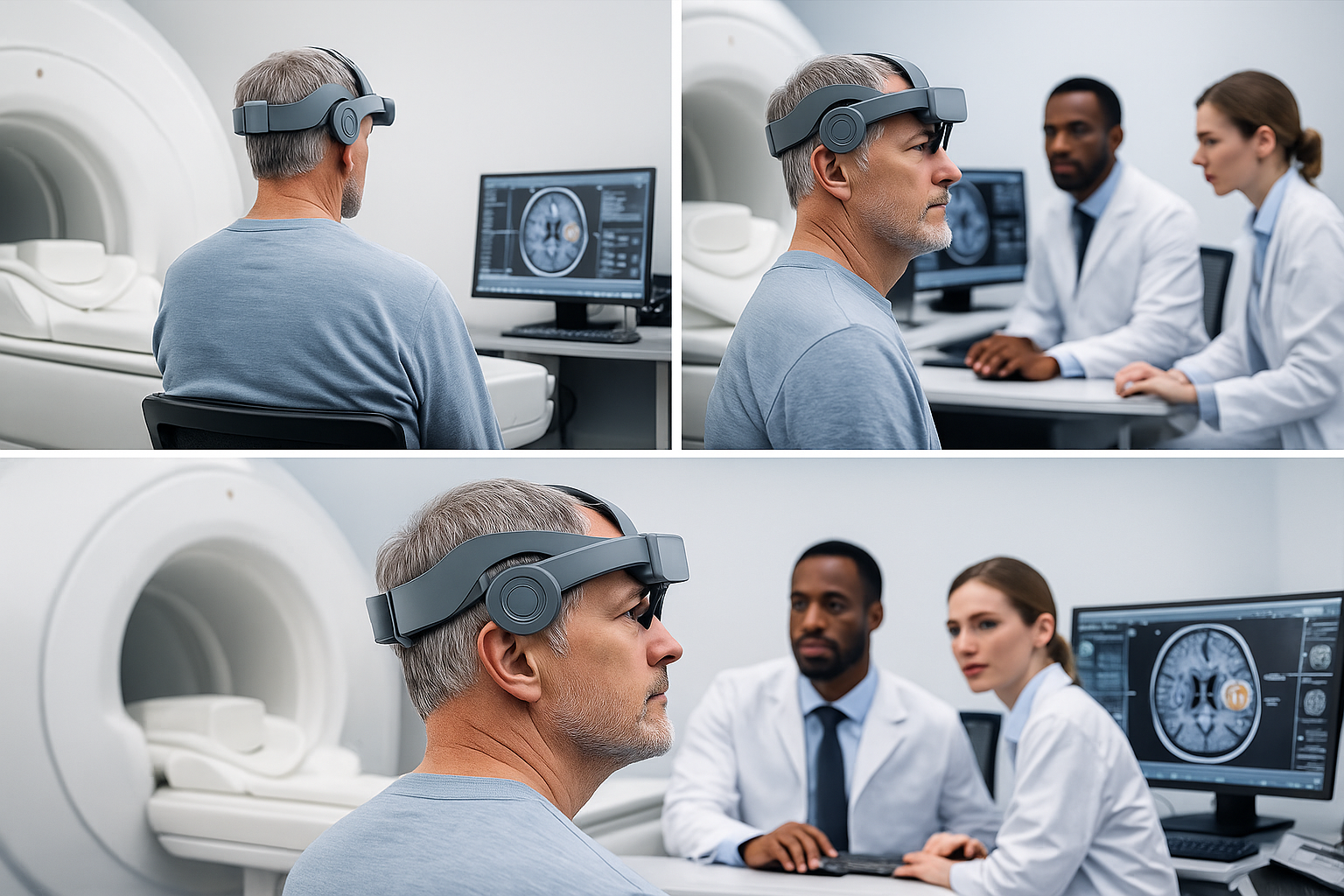
Wearable Embedded Guidance Platform (ESP32-S3 + BLE)
As part of a multidisciplinary engineering team, work was completed on a head-mounted wearable system incorporating an ESP32-S3 microcontroller, custom firmware, and low-latency BLE communication. The device was designed to support real-time guidance, localization, and training workflows in specialized environments.The platform integrates precision sensors, a lightweight ergonomic frame, and a scalable embedded architecture that enables external workstations or analysis tools to receive continuous positional data. This approach allows intelligent wearable technology to be introduced into existing operational processes without adding unnecessary complexity in the medical field
How Edge AI Can Transform the Medical Field
Edge AI brings intelligence directly onto medical devices, enabling faster, safer, and more responsive healthcare solutions. Instead of relying solely on cloud processing, sensors and embedded systems can now analyze data instantly at the point of care. This reduces latency, improves reliability, and ensures that critical information is available the moment it’s needed — an essential advantage in time-sensitive medical environments.
By processing data locally, Edge AI greatly enhances patient privacy. Sensitive information such as biometric data, imaging results, or physiological signals can be interpreted on the device itself without leaving the room or traveling over the internet. This reduces exposure risk, strengthens confidentiality, and supports compliance with strict healthcare regulations.
Edge AI also opens the door to smarter, more capable medical tools. Portable scanners, wearables, and diagnostic instruments can perform real-time classification, anomaly detection, motion tracking, or signal interpretation without needing a full computer or server. This enables hospitals and clinics to use smaller, lighter, more energy-efficient devices that still deliver high-precision results.
For clinicians, Edge AI can act as an intelligent assistant. Devices can guide users, flag irregularities, highlight significant changes, or provide immediate feedback during procedures or training sessions. This enhances consistency, reduces human error, and gives medical teams an additional layer of insight without disrupting their workflow.
Finally, Edge AI supports decentralized healthcare. As medical systems become more mobile, AI-enabled devices allow tests, evaluations, and monitoring to be performed outside major hospitals — in smaller clinics, in remote areas, or even in the patient’s home. This improves accessibility, reduces costs, and brings advanced care to places where it was previously unavailable.
In addition to embedded systems and edge-AI development, our team also supports a wide range of related engineering needs, including rapid prototyping, sensor integration, custom electronics, wireless communication systems, wearable device design, and hardware-to-software data pipelines. This allows clients to explore new concepts and evolve ideas into functional, testable solutions.
Unlock a world of innovation
Receive exclusive insights, industry trends & valuable tips delivered straight to your inbox.
Get in Touch